Best Pocket Microscopes in 2026: Field-Ready Picks From $10
A pocket microscope is the gadget that turns a walk in the woods, a coin box or a garden bed into a field trip. For under $30 you can carry 60x-250x magnification in a jacket pocket — enough to identify spider mites on a leaf, check a coin’s mint mark, or show a kid what a butterfly wing is really made of.
Since we first wrote this guide, the category has split in two. On one side: the classic optical pocket scopes — Carson still rules here, batteries optional, nothing to break. On the other: a new wave of $25-40 digital pocket microscopes with built-in LCD screens that photograph what they see. Both belong in a 2026 roundup, so this update covers the best of each.
The Best Pocket Microscopes in 2026
- Carson PocketMicro MM-450 — Best Overall
- Carson MicroBrite Plus MM-300 — Best Value Classic
- Carson MicroFlip MP-250 — Best With a Phone Clip
- TOMLOV P10 — Best Digital for Coins & Jewelry
- Skybasic WiFi 50X-1000X — Best Wireless-to-Phone
- Celestron Kids Pocket Zoom — Best for Young Kids
- Carson MicroMini MM-380 — Best Keychain Scope
- SE MW10084 30x — Best Under $10
Carson PocketMicro MM-450 – Best Pocket Microscope Overall
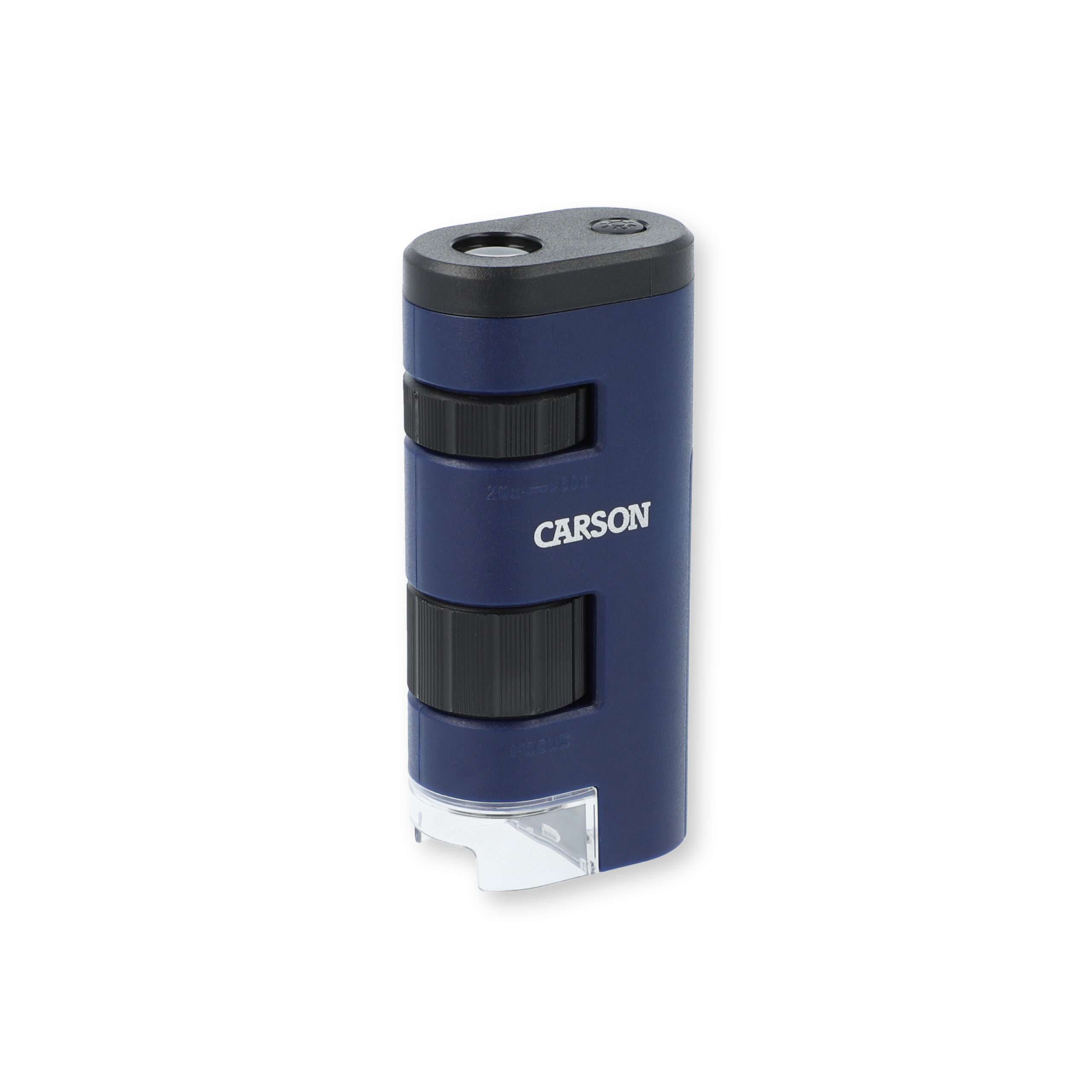
Carson’s PocketMicro has quietly become the best-reviewed pocket microscope you can buy — Popular Science crowned it their best overall pick, and its Amazon rating leads the whole Carson lineup. The secret is restraint: instead of chasing big magnification numbers, it zooms 20x to 60x, the range you actually use in the field.
Lower magnification means a wider view, more light and a steadier image — you can find the interesting part of a leaf at 20x, then zoom to 60x for detail, all through a surprisingly sharp aspheric lens system with LED illumination. At under four inches long and powered by one AA battery, it disappears into any pocket.
At $12-16 it’s an easy recommendation for naturalists, gardeners (60x is exactly what you need to identify spider mites), stamp and mineral collectors, and curious kids of any age. The one universal caveat of this whole category applies: hold it steady or brace it against the object — pocket scopes punish shaky hands.
- The most useful zoom range in the field
- Sharp aspheric optics, built-in LED
- Best-rated Carson pocket scope
- Under $16
- Needs a steady hand
- No smartphone adapter included
- Not for slide-level cell detail
Carson MicroBrite Plus MM-300 – Best Value Classic
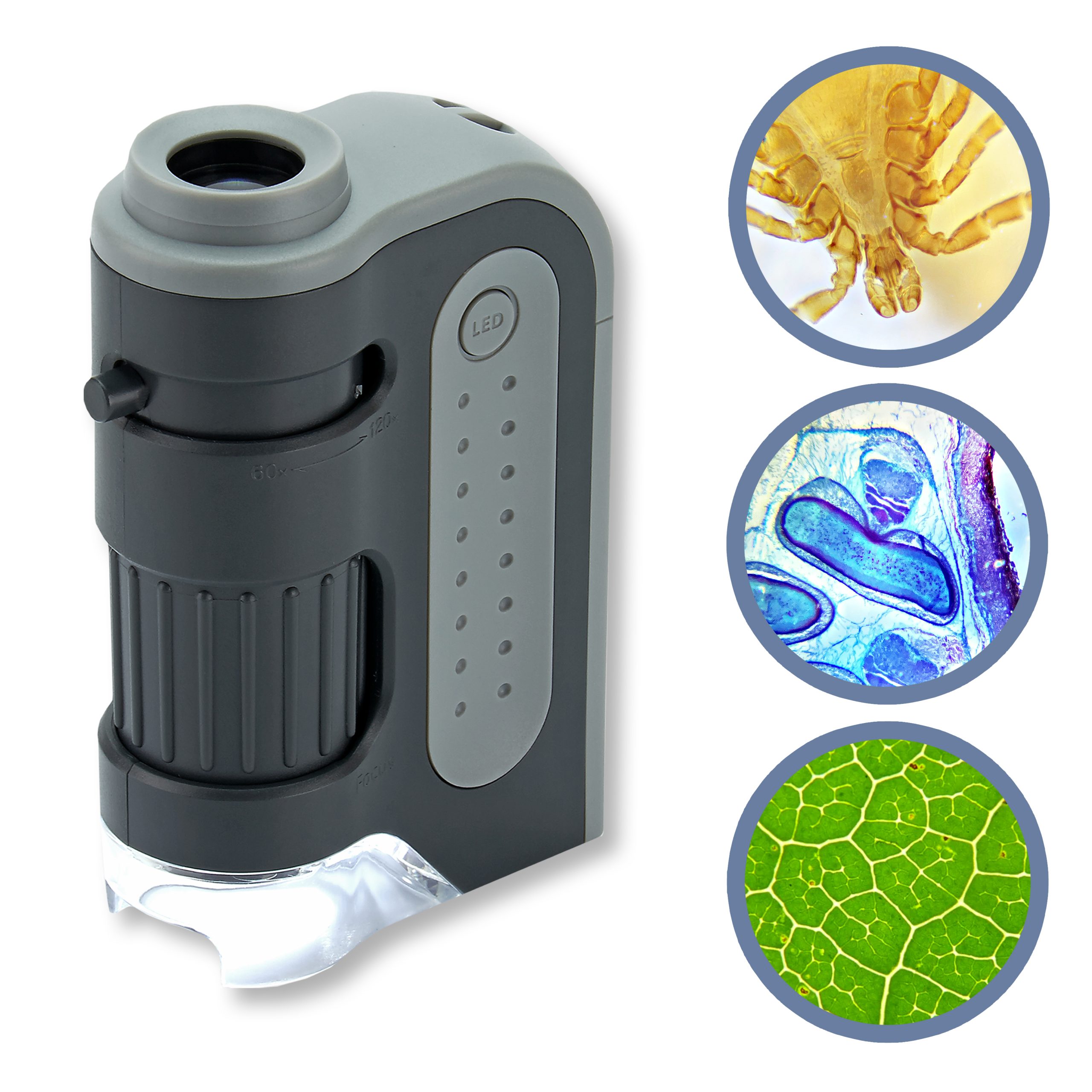
The MicroBrite Plus is the pocket microscope — over 9,000 Amazon ratings and a permanent spot on every best-of list for a decade. Its 60x-120x zoom reaches closer than the PocketMicro, close enough to see the crystalline structure of sand grains or the scales on a moth’s wing, and the aspheric lens keeps the image honest at a price that hovers around $13.
Why is it second on our list, then? Range trade-off: starting at 60x means a tiny field of view, so finding your target takes more patience than with the 20x-60x PocketMicro, and at 120x any hand tremor is magnified 120 times too. It rewards bracing it directly on the object.
Pick the MicroBrite when you know you want maximum magnification in a pocket; pick the PocketMicro when you want the easiest all-round field tool. Schools buy the MicroBrite by the four-pack, and if you want to photograph through it, Carson sells the same scope bundled with a phone digiscoping clip as the MicroBrite Pro Kit (MM-350).
- Genuine 60x-120x for ~$13
- Decade-long track record, 9,000+ ratings
- Bright LED, aspheric optics
- Runs on one AA battery
- Narrow field of view at 60x+
- Focusing is fiddly
- Image appears inverted
Carson MicroFlip MP-250 – Best Pocket Microscope With a Phone Clip
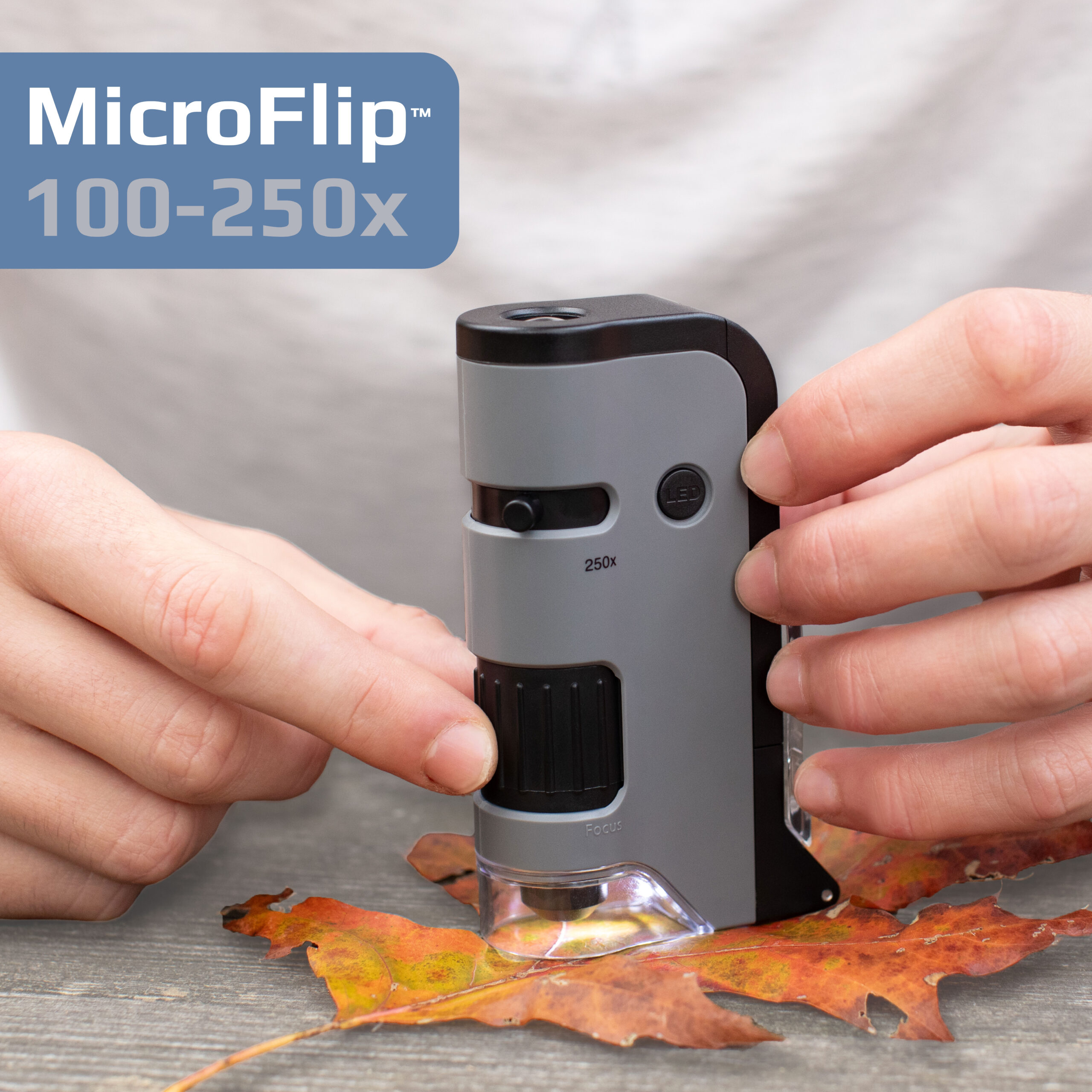
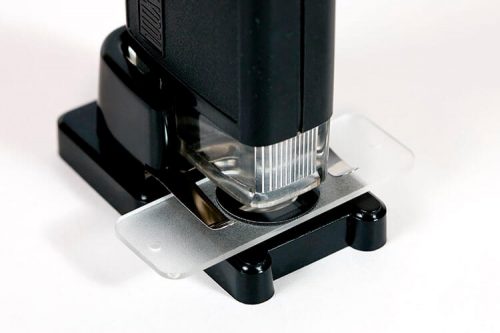
The MicroFlip is the power tool of Carson’s pocket line and Popular Science’s value pick: 100x-250x magnification with a flip-down slide base, a smartphone digiscoping clip in the box, and — the sleeper feature — a built-in UV flashlight alongside the white LED. UV reveals security marks on currency, fluorescent minerals and a few other party tricks.
At 100x-250x you’re into genuine micro-territory — prepared slides work (one starter slide comes included), pond-water critters are visible, and the phone clip lets you actually document what you find instead of describing it. That’s a lot of laboratory for about $18.
The usual physics applies twice as hard here: at 250x the field of view is minuscule and a tripod-steady grip (or the flip-down base) is mandatory. And the phone clip, while welcome, doesn’t love every camera-bump layout — check fit reports for your model.
- Real 100x-250x in a pocket
- UV + LED lighting built in
- Phone clip and slide base included
- Works with prepared slides
- Tiny field of view at 250x
- Phone clip doesn’t fit every phone
- Demands a steady setup
TOMLOV P10 – Best Digital Pocket Microscope for Coins and Jewelry
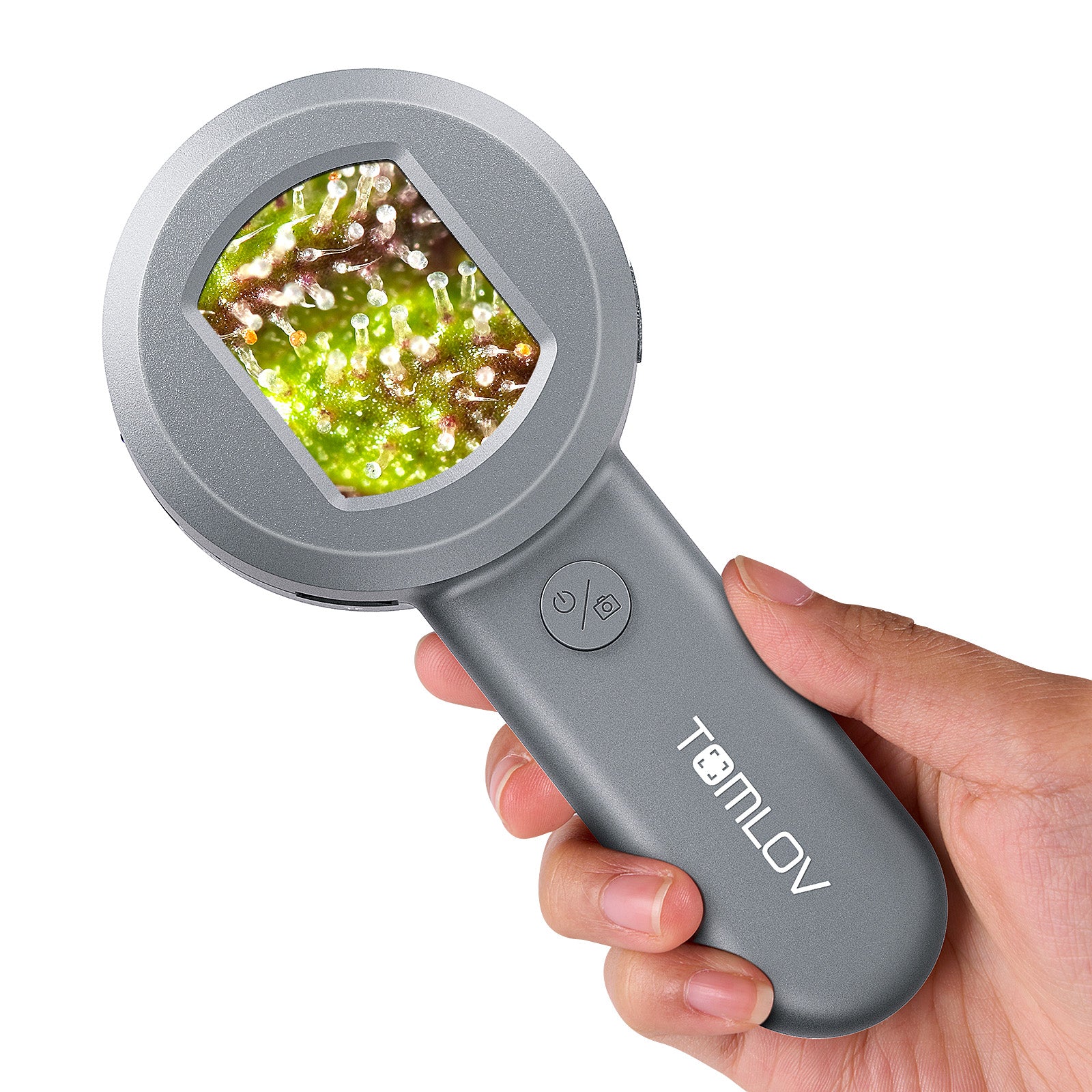
Here’s what the new generation looks like: a magnifying-glass-shaped gadget with a 2-inch screen where the lens would be. The TOMLOV P10 gives you 100x magnification on its display, captures photos to memory, and adds both white and UV LEDs — the UV matters, because fluorescence checks are a standard authentication trick for currency and some gemstones.
Coin collectors have adopted this format en masse, and it’s easy to see why: no squinting into an eyepiece, no phone-clip origami — you just hold it over the coin and both you and the person next to you see the strike details on screen. At around $24 it earned the top spot in MicroscopeClub’s 2026 pocket roundup.
Know what it isn’t: the magnification is fixed rather than zoomable, and like all cheap digitals the fine detail is limited by a small sensor. For leaves, coins, stamps and jewelry it’s brilliant; for slide-level biology, look at the MicroFlip above.
- Screen instead of eyepiece — easy on the eyes
- UV LED for authentication checks
- Captures photos of what you find
- About $24
- Fixed magnification
- Small-sensor image quality
- Another gadget to charge
Skybasic WiFi 50X-1000X – Best Wireless Pocket Microscope
The Skybasic has been the best-selling WiFi pocket microscope on Amazon since roughly 2018, and longevity like that means something in a category where brands evaporate yearly. It creates its own WiFi hotspot and streams live video to an iPhone, iPad or Android through a free app — no cables, no computer — with a battery good for hours of exploring.
Honesty about the headline number: independent testing puts real magnification around 50-100x, not the claimed 1000x, which is digital-zoom arithmetic. That’s still plenty for skin, plants, fabrics, PCBs and bugs, and the 2MP camera saves respectable 1080p captures straight to your phone’s gallery.
At $28-32 it’s the pick when the phone is the point — for a kid who wants to collect discoveries, or anyone who’d rather share a live view than take turns at an eyepiece. Expect a touch of WiFi lag and a wobbly little stand; neither ruins the fun.
- Streams live to iPhone/Android — no wires
- Saves photos and 1080p video
- Battery-powered, genuinely portable
- Longest-lived brand in its niche
- Real magnification ~50-100x, not 1000x
- Slight WiFi video lag
- Flimsy plastic stand
Celestron Kids Pocket Zoom – Best Pocket Microscope for Young Kids
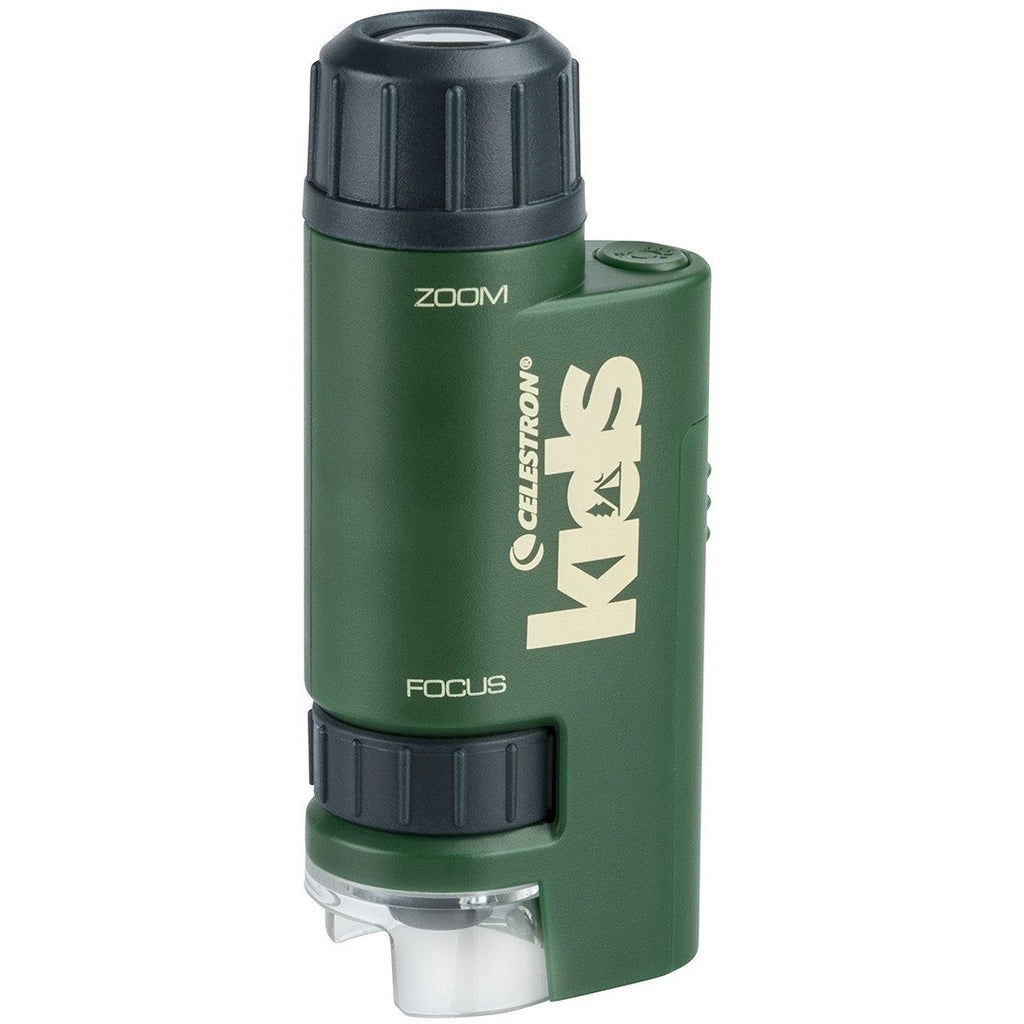
A housekeeping note first: this is the microscope our earlier guide listed as “Celestron Kids Let Your Child Explore The World” — Celestron has since renamed the same scope (model 44116) to the mercifully shorter Kids Pocket Zoom Microscope. Same 60x-120x zoom, same LED illuminator, same single AAA battery.
What makes it the young-kid pick over the Carsons is the ergonomics: a chunky, grippy body built for small hands and STEM-classroom abuse, from a brand whose kids’ line is properly supported. At $17-19 it’s an ideal first “real science tool” for the 6-10 crowd.
An older kid — say ten and up — will be happier with the sharper PocketMicro or the screen-equipped Skybasic; there’s nothing here an adult would choose over the Carsons except the toughness.
- Built for small hands and rough use
- Proper 60x-120x zoom, not a toy lens
- Trusted brand, active support
- Optics a notch below Carson’s
- Outgrown by ~age 10
Carson MicroMini MM-380 – Best Keychain Microscope
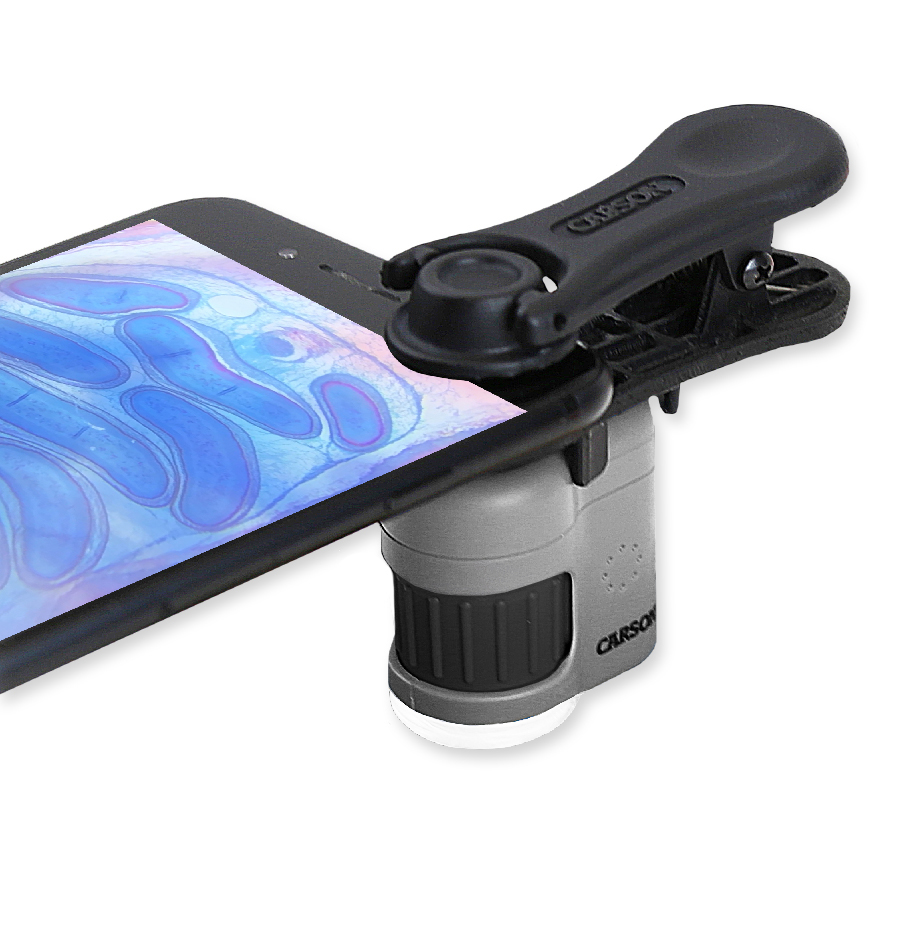
The MicroMini clips to a keychain or backpack zipper and weighs about an ounce, yet packs three lights — an LED for the 20x microscope view, a plain LED flashlight, and a UV light — plus a magnetic smartphone adapter for snapping what you see. It’s the always-with-you option.
20x won’t show you cells, but it’s the perfect magnification for the everyday curiosities: insect identification, splinter surgery, fabric weaves, print quality, and keeping a seven-year-old busy on a hike. Around $12-18 depending on where you catch it (Amazon has been cheaper than Carson direct lately).
- Lives on a keychain — always with you
- LED + flashlight + UV in one
- Magnetic phone adapter included
- Only 20x
- Button-cell batteries
SE MW10084 30x – Best Pocket Microscope Under $10
Still around, still about ten dollars, still doing one job well. The SE MW10084 is a 30x fixed-magnification pocket scope with an adjustable LED, a focus wheel, and a party trick: it doubles as a small flashlight. Prospectors and coin dealers buy them by the handful as loaners and glovebox spares.
The build is exactly what $10 buys — plasticky, with a fiddly focus — but the optics are honest 30x and it runs on two AA batteries you already own. As a stocking stuffer or a “let’s see if the kid is interested before buying the Carson” test, it’s unbeatable.
- About $10
- Honest 30x with adjustable LED
- Doubles as a flashlight
- Budget build quality
- Fixed magnification
What Changed Since Our Last Version?
- Carson MicroMax MM-200 — being phased out: out of stock at Carson, delisted from Amazon. The MicroBrite Plus covers the same ground better.
- Carson MicroPen MP-300 — technically alive, but effectively gone from Amazon (third-party sellers only) and its real magnification is 24x-53x, not what the old marketing implied. Skip.
- KINGMAS Mini 60x — still listed, but it’s a jeweler’s loupe in microscope clothing with spotty stock. The SE MW10084 is the better cheap pick.
- Carson X-Scope — the 7-in-1 kids multi-tool lives on (~$14) and remains a fun gift, but the dedicated scopes above serve every purpose better.
- New since 2020: the entire LCD-digital category (TOMLOV, Elikliv and friends) — plus Carson’s own MicroPic MP-400 and MicroBrite Pro Kit bundles.
Optical or Digital? How to Choose in 2026
Optical (the Carsons, Celestron, SE): no charging, no screen to break, better raw optics per dollar, works in the rain and the cold. The right call for fieldwork, gardens, and kids who lose chargers. Digital (TOMLOV, Skybasic): everyone sees the image at once, you keep photos of what you find, and UV models add authentication tricks — the right call for coins, jewelry and show-and-tell. Prices overlap so completely that the honest answer for many readers is one of each: a $13 MicroBrite in the jacket, a $24 P10 in the coin drawer.
One number to distrust: claimed magnification on digital models. “1000x” on a $30 gadget means digital zoom; real optical performance is 50-200x across this whole price class. It’s still useful magnification — just don’t expect bacteria.
And a wildcard worth knowing about: the Foldscope, an origami paper microscope developed at Stanford that weighs 9 grams, costs around $25-50 in kits, and has genuine peer-reviewed science published with it. As a classroom or travel curiosity, nothing else in this article has its credentials.
Conclusion
- One scope for everything: Carson PocketMicro MM-450.
- Maximum optical zoom for pocket money: Carson MicroBrite Plus.
- Slides, UV and phone photos: Carson MicroFlip MP-250.
- Coins and jewelry on a screen: TOMLOV P10.
- Streaming to phones, family-style: Skybasic WiFi.
- Six-year-old scientist: Celestron Kids Pocket Zoom.
Whichever you pick, the first test subject is free: a pinch of table salt. Under even 30x, those boring white grains turn into a pile of glass cubes — and that’s usually the moment a pocket microscope stops being a gadget and starts being a habit.