Best Coin Microscopes in 2026: What Collectors Actually Need
Here’s a secret from the professional side of the hobby: the graders at PCGS and NGC mostly work with simple 5x-10x loupes, and old hands on the coin forums will tell you that 30x is plenty “99% of the time.” So why buy a coin microscope at all?
Because the three things a microscope does better than any loupe — checking mint marks and die varieties, spotting cleaning and altered surfaces, and photographing your coins for records or eBay — are exactly the things collectors do every week. And since we last updated this guide, doing them has gotten dramatically cheaper: the market is now full of $30-130 digital microscopes with built-in screens, designed specifically around coins.
This 2026 update reflects that shift. Several of our old picks died (details below), the LCD generation took over, and one classic stereo microscope remains for the traditionalists.
The Best Coin Microscopes in 2026
- Elikliv EDM4 — Best Budget Coin Microscope
- TOMLOV DM9 — Best Mid-Range
- TOMLOV DM9 Max — Best Big-Screen
- TOMLOV P10 — Best Pocket Scope With UV
- AmScope SE400-Z — Best Stereo Microscope
- Plugable USB 250x — Best PC-Connected
- Dino-Lite AM4113ZT — Best Professional
Elikliv EDM4 – Best Budget Coin Microscope
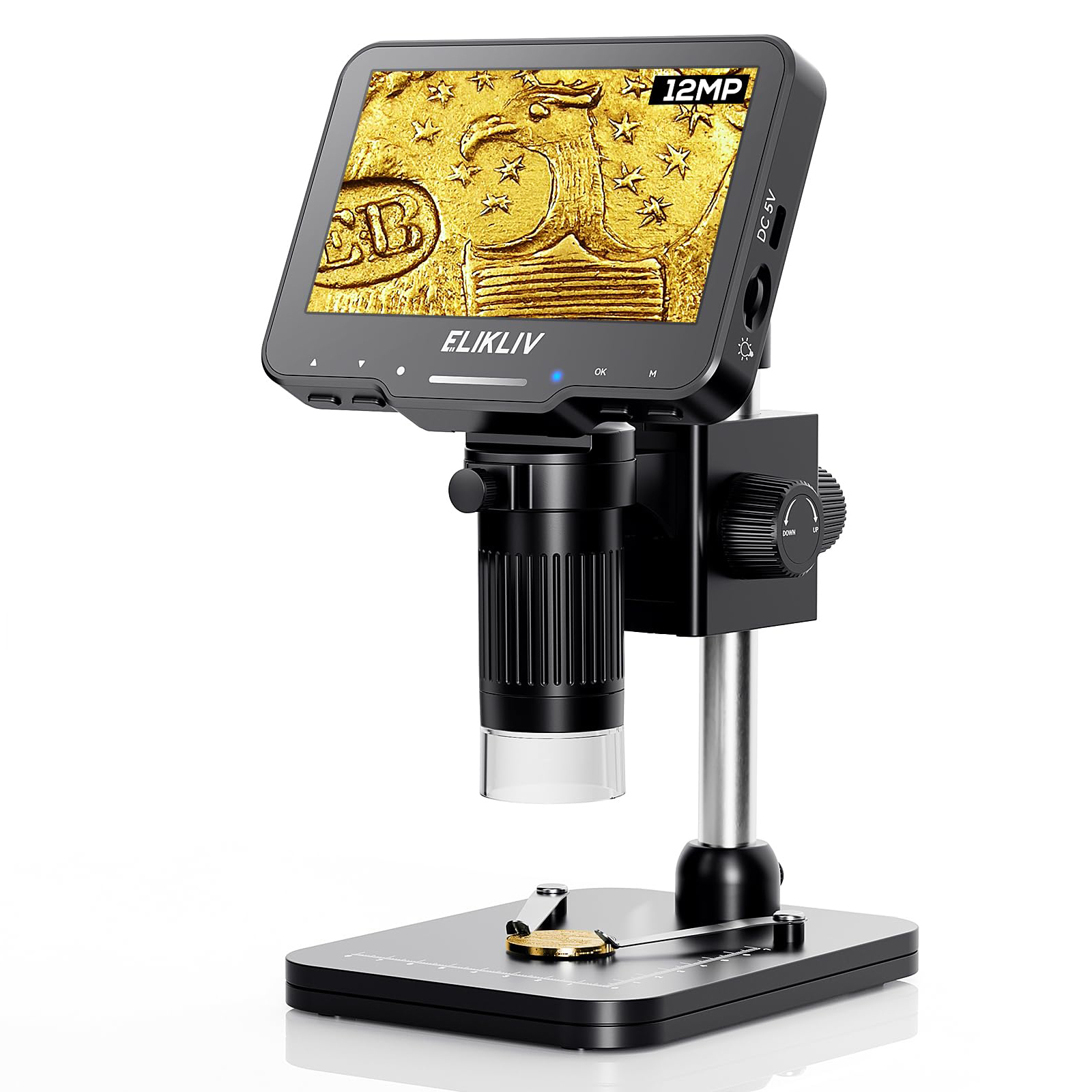
The EDM4 is the coin microscope of the moment: around $33-35, a 4.3-inch screen, eight individually adjustable LEDs, a rechargeable battery, and one of the biggest, happiest review bases in the category. Every 2026 roundup we cross-checked names it the budget pick, and for a collector who mostly wants to check mint marks and die details without squinting, it’s the obvious first buy.
The eight LEDs are the coin-specific feature: glare on reflective surfaces is the eternal enemy of coin photography, and being able to dim individual lights lets you rake light across the surface until the strike detail pops instead of blinding you. Photos and video save to a microSD card (bring your own), and it connects to a Windows or Mac computer over USB when you want a bigger view.
Honesty about the box copy: “1000x” is digital-zoom marketing — buyers who measure put the useful working range far lower, which is fine, because coins don’t need more. Real weaknesses: the plastic stand is top-heavy and a little short for framing a whole silver dollar, and check the box for the charger. If a variant tempts you, the EDM4C adds a built-in 0.1g coin scale — a genuinely clever counterfeit-screening extra.
- Absurd value at ~$35
- 8 adjustable LEDs tame coin glare
- Battery-powered, saves photos to SD
- Category best-seller with 8,000+ ratings
- “1000x” claim is digital-zoom fiction
- Wobbly, short plastic stand
- 720P sensor — fine on screen, modest in photos
- SD card not included
TOMLOV DM9 – Best Mid-Range Coin Microscope
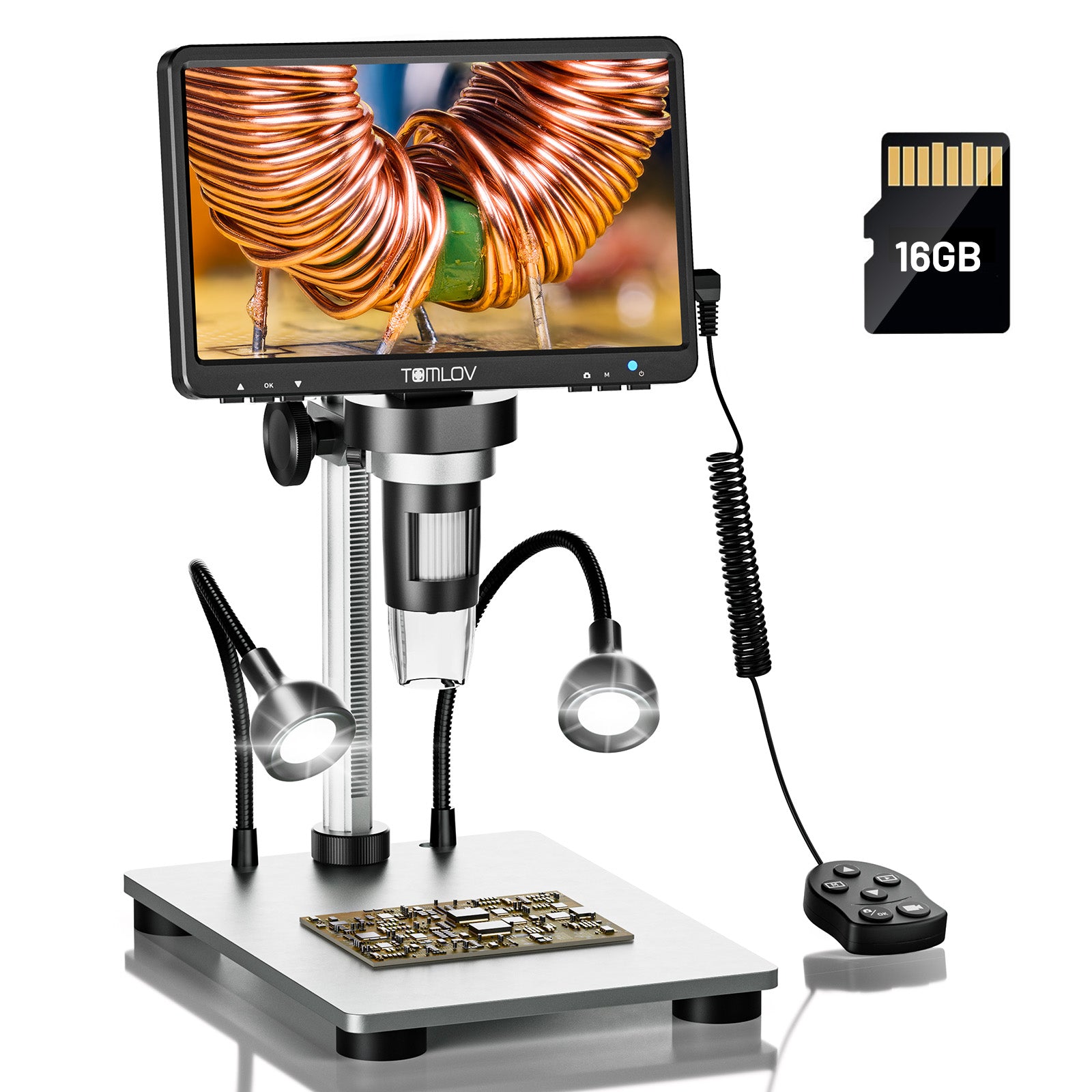
Spend twice the EDM4’s price — about $70 — and the DM9 fixes most of its compromises: a 7-inch rotatable screen, a 12MP sensor, a proper metal stand, and the feature coin photographers care most about — two flexible gooseneck side lights on top of the eight built-in LEDs. Off-axis gooseneck lighting is the classic trick for killing glare and raising relief detail on proofs and toned coins.
Reviewers across the coin roundups agree on its position: the best value in the mid-range, sharp enough for variety attribution and error hunting, and stable enough for consistent eBay photography. A wireless remote and included SD card round out the kit.
Same caveat as every scope in this class: the “1200X” number is marketing; the useful working magnification is far lower and entirely sufficient. If we could only own one coin microscope under $100, this is it.
- Gooseneck side lights — the glare killer
- Sharp 12MP sensor, 7″ rotatable screen
- Solid metal stand
- Consensus mid-range pick at ~$70
- Mains-powered at the desk (no battery in most kits)
- Magnification numbers still inflated
TOMLOV DM9 Max – Best Big-Screen Coin Microscope
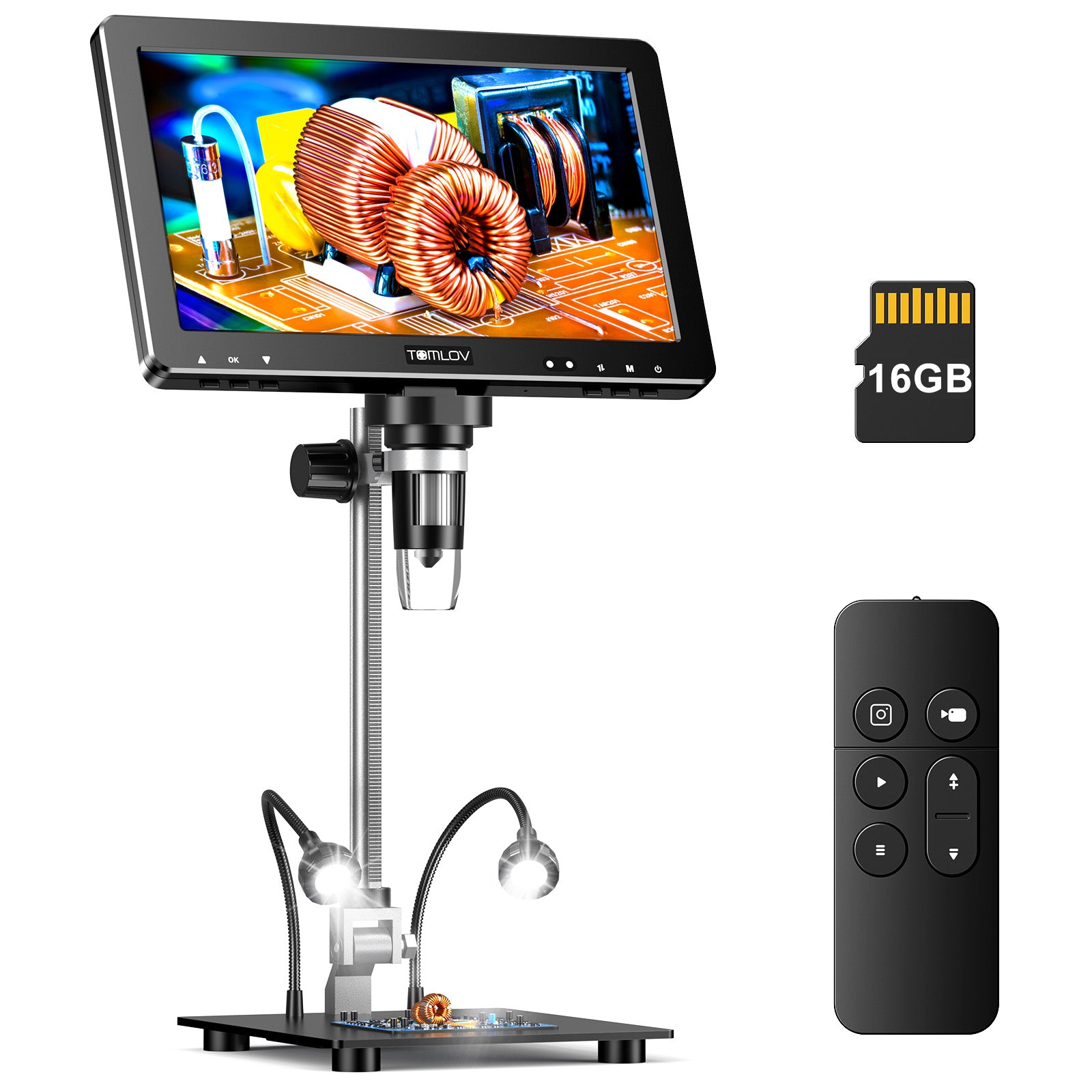
The DM9 Max is the same idea grown up: a 10.1-inch IPS screen, a 20MP sensor, ten LEDs and HDMI output so you can put the live view on a TV or monitor — which turns coin examination into something you can do with another collector at the table instead of hunched over an eyepiece.
At about $120-130 the roundups position it as the pick “for serious collectors and authentication work,” and the extra resolution genuinely shows in saved photos — this is the one to buy if your images end up in auction listings. If you want a version with a flexible arm for odd angles, TOMLOV sells one; the triple-lens DM602 family is the alternative at the same money.
- Huge 10.1″ screen, HDMI out
- 20MP stills — auction-grade photos
- Ten LEDs, solid stand
- ~$130 — most people don’t need it
- Desk-bound footprint
TOMLOV P10 – Best Pocket Coin Scope With UV
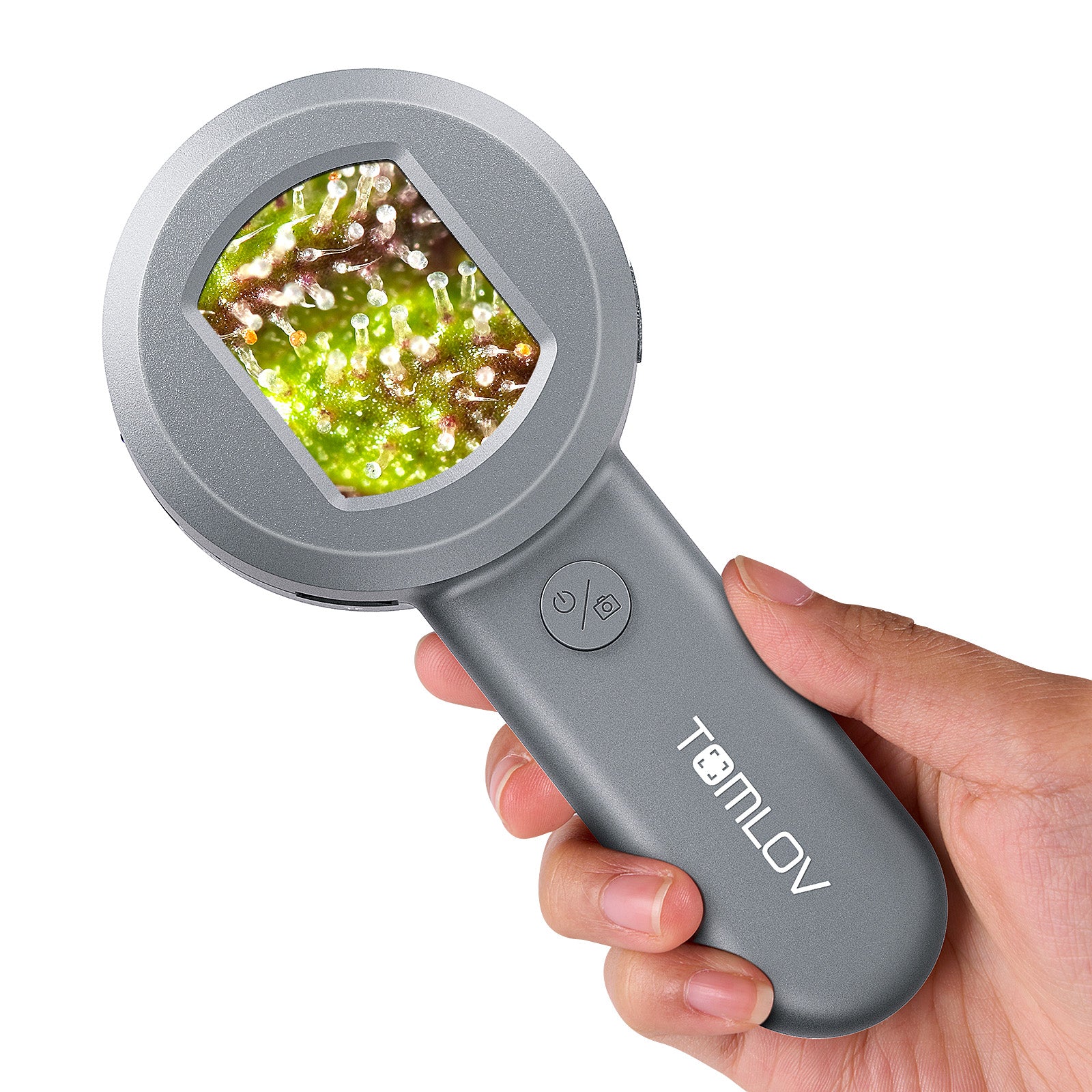
The P10 is the one to take to the coin show. It’s shaped like a magnifying glass with a 2-inch screen in place of the lens, weighs under four ounces, runs on a battery — and alongside its four white LEDs it has four UV LEDs, switchable at a press.
About that UV, because it’s widely misunderstood: silver and gold don’t fluoresce, so UV won’t “authenticate metal.” What it does reveal is everything that shouldn’t be on a coin — organic residues, added resins and fillers, evidence of cleaning, and some artificial toning jobs glow under UV in a way bare metal never does. As a quick first-pass screen at a table full of raw coins, that’s genuinely useful for about $24.
- Pocketable, battery-powered, ~$24
- UV mode exposes cleaning and additives
- Screen beats a loupe for tired eyes
- Fixed magnification
- Small-sensor image quality
AmScope SE400-Z – Best Stereo Microscope for Coins
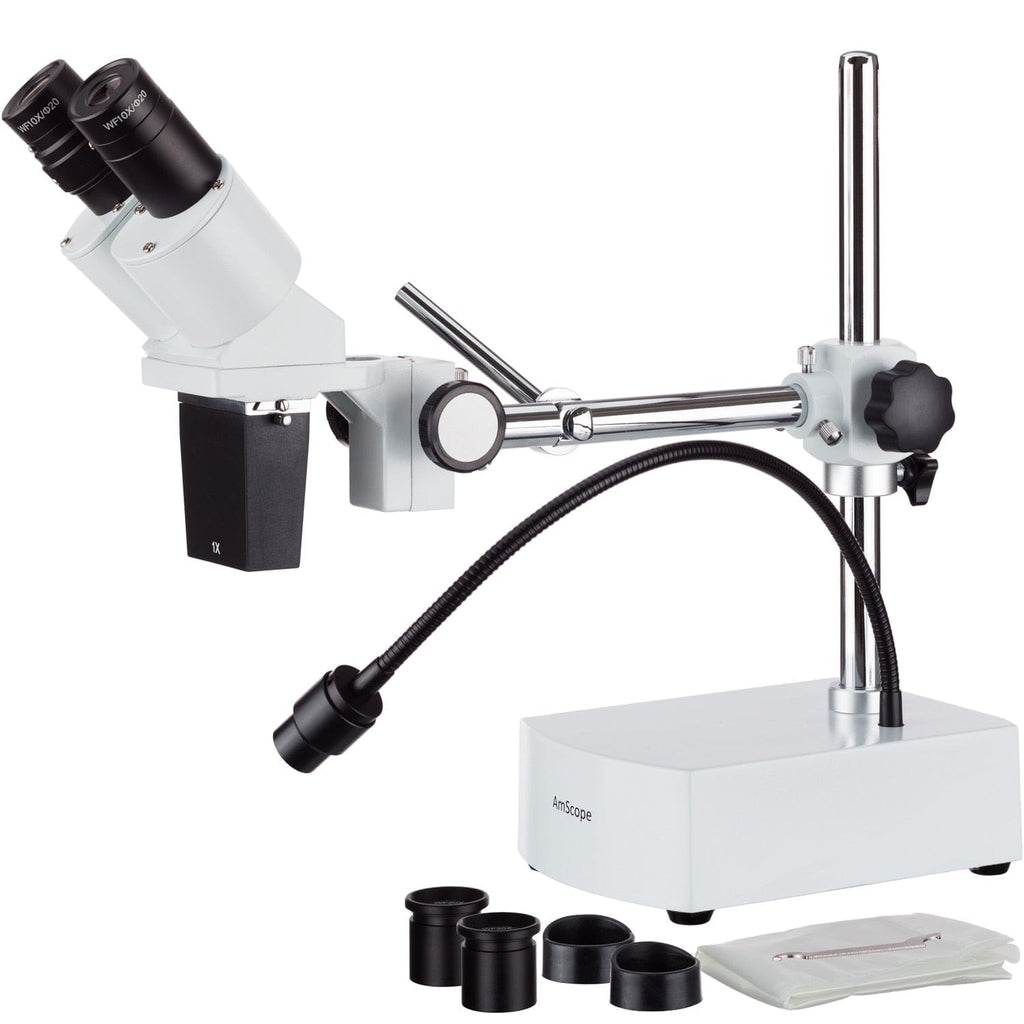
Everything above shows you a coin on a screen. A stereo microscope shows it to your own two eyes in real depth — and for reading a die crack or judging whether a scratch breaks the surface, that three-dimensional view is something no 2D sensor replicates. It’s also what the coin-forum veterans consistently point to: the community consensus is that 10x-30x of good stereo optics beats any amount of digital zoom.
The SE400-Z is the sensible way in at around $250-290: 10x and 20x magnification — exactly the numismatic sweet spot — on a boom-arm stand with a long 9-inch working distance and a gooseneck LED. The boom arm matters: it swings freely over an album page or a slabbed coin, no stage to fight with.
(Our previous stereo pick, the AmScope SE306R-AZ, is out of stock at the manufacturer with its Amazon listings mutating between variants — and its 20x-80x range was honestly more than coins need. The SE400-Z is both easier to buy and better matched to the job.)
- True 3D view — reads surface depth
- 10x/20x is the numismatic sweet spot
- Boom arm swings over albums and slabs
- Nothing to charge, nothing to lag
- ~$250-290 and desk-bound
- No photos without adding a camera
Plugable USB 250x – Best PC-Connected Coin Microscope
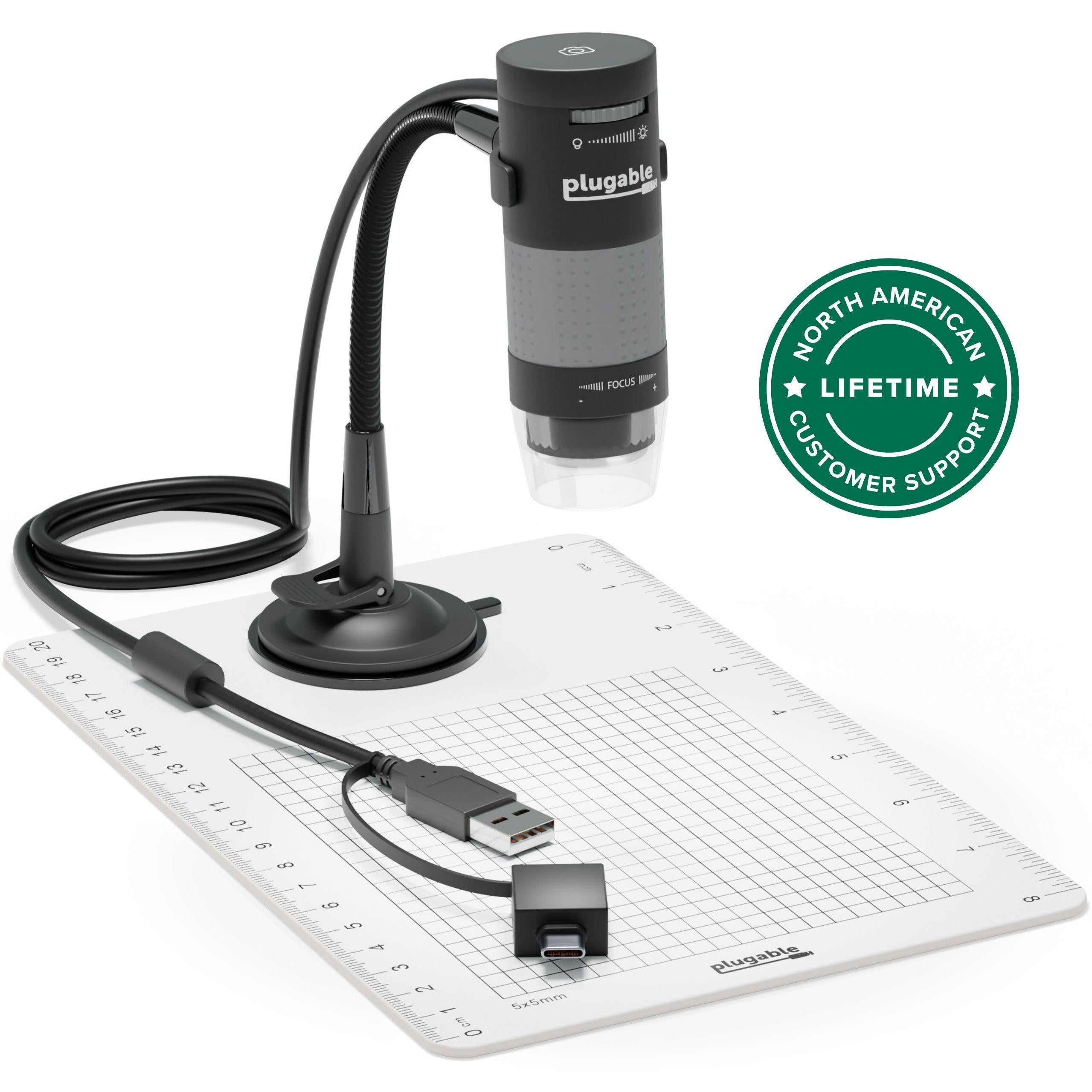
The lone survivor from our previous lineup, and it survives for the same reason it made the list back then: it behaves as a plain webcam, so it works on Windows, macOS, ChromeOS, Linux and Android with zero drivers — including the current OS versions that killed several rivals’ software. If your coin workflow lives on a computer (cataloging in a spreadsheet, cropping photos for listings), a scope that pipes straight into the machine is the efficient tool.
The 2MP sensor captures at 1600×1200 with an LED halo and a snapshot button; the flexible-arm stand is the weak point, so brace it for sharp shots. It’s about $60 now — pricier than its old $40 reputation, but with US lifetime support behind it.
- Driver-free on every OS, still updated
- Straight into your cataloging workflow
- LED halo with dimmer
- Needs a computer — no screen of its own
- Wobbly flexible-arm stand
Dino-Lite AM4113ZT – Best Professional Coin Microscope
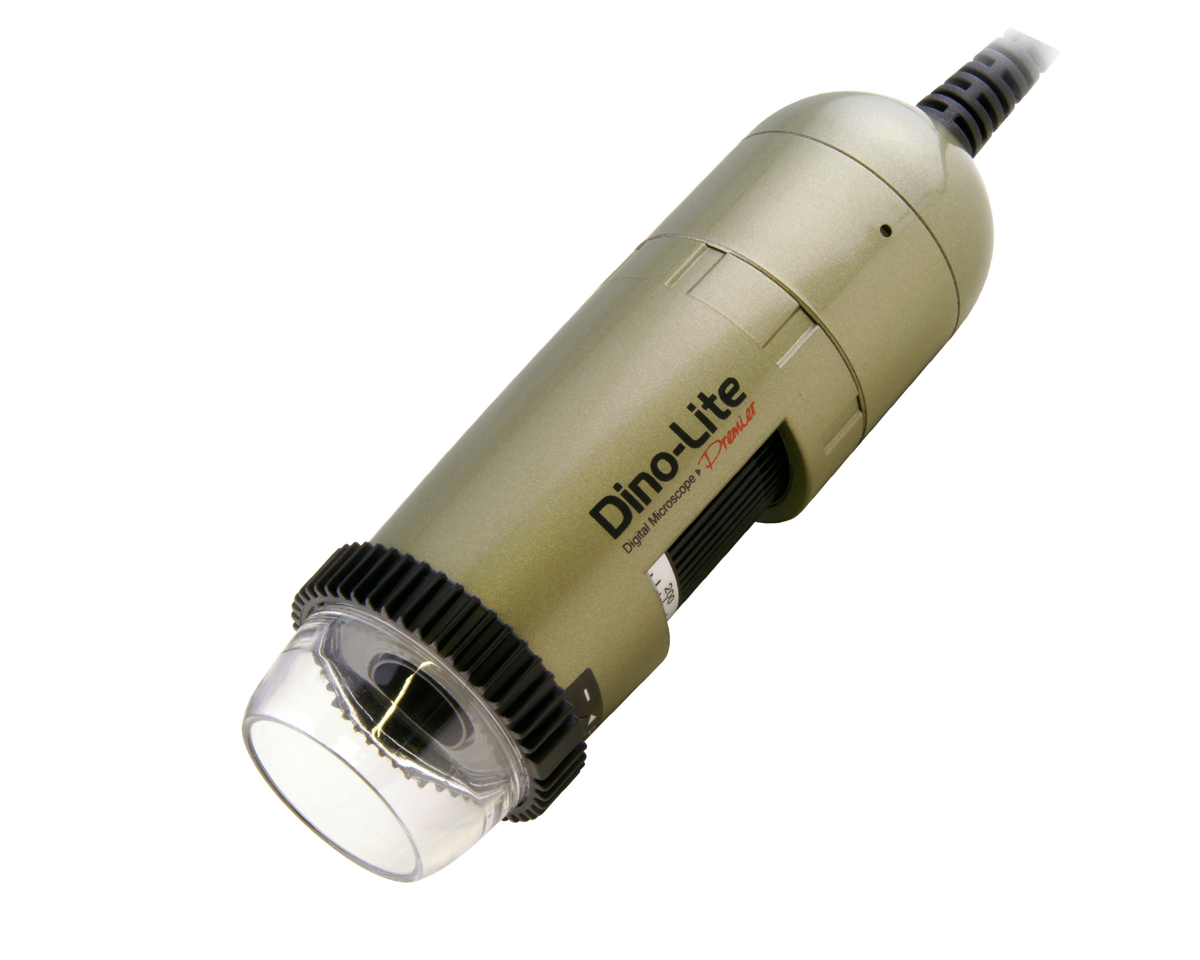
Remember how every scope above fights coin glare with clever LED arrangements? The Dino-Lite solves it with physics: a built-in adjustable polarizer that simply switches reflections off. On proofs, prooflike surfaces and lustrous mint-state coins, the difference is not subtle — it’s the feature that makes this the standard handheld in professional inspection work.
Add calibrated measurement software (real, traceable measurements of die markers and features — the thing cheap scopes only imitate) and Mac-and-Windows support with an actual update history, and you get the tool for people whose coins justify it. At around $539 that’s dealers, authenticators and top-shelf collections; for everyone else, the EDM4 or DM9 above does the hobbyist’s job at a twentieth of the price.
- Built-in polarizer — glare simply gone
- Calibrated measurement software
- Industry-standard build and support
- ~$539
- 1.3MP sensor — measurement tool, not a camera
What Happened to Our Previous Picks?
- AmScope SE306R-AZ — sold out at AmScope; its Amazon listing now serves a different variant with different eyepieces. Replaced above by the better-suited SE400-Z.
- Celestron 5MP Digital Microscope Pro — end-of-life: out of stock at Celestron, leftover stock at erratic prices, software unsupported on Windows 11.
- Aven Mighty Scope 26700-209-PLR — discontinued; its successor (Mighty Scope v2) is a $340-495 industrial tool that’s overkill here.
- Koolertron 7″ LCD — technically alive, but the brand is fading and listings churn; the TOMLOV DM9 is the stable buy in that slot.
- Jiusion 4.3″ LCD — gone from Amazon US entirely.
How to Choose a Coin Microscope in 2026
Magnification: less than you think. Professional graders work at 5x-10x; variety and error specialists at 10x-30x. Any scope on this list reaches that easily — so ignore the “1000x/1500x” numbers on the boxes (digital zoom arithmetic) and judge on lighting, stand and sensor instead.
Lighting is the real spec. Coins are little mirrors. Adjustable multi-LED arrays (EDM4) are good, off-axis gooseneck lights (DM9) are better, and a true polarizer (Dino-Lite) is the endgame. If a listing shows only one fixed ring light, keep scrolling.
Know the honest limit of cheap digitals. Coin-forum veterans point out, fairly, that a $33 scope can’t frame an entire silver dollar in one sharp image and won’t replace a scanner for full-coin shots. What it does brilliantly is the close work — mint marks, die cracks, edge details, VAM attribution — and that’s what you’re buying it for. (If you also want a pocket scope for shows and general curiosity, see our pocket microscope guide.)
Conclusion
- First coin microscope, minimal spend: Elikliv EDM4.
- The one we’d buy: TOMLOV DM9.
- Auction-grade photos and shared viewing: TOMLOV DM9 Max.
- Coin shows and UV screening: TOMLOV P10.
- The traditionalist’s 3D view: AmScope SE400-Z.
- Money’s no object, glare’s the enemy: Dino-Lite AM4113ZT.
Whichever you choose, start with the most worn coin in your collection, not the prettiest — the microscope’s magic trick is finding history in surfaces your naked eye gave up on years ago.