Best Barlow Lens for Your Telescope in 2026 (7 Picks Re-Tested by the Market)
A Barlow lens is still the best bargain in amateur astronomy: one small tube that multiplies the magnification of every eyepiece you own. Buy a 2x Barlow and your four eyepieces become eight — no other $40 purchase does that.
But the market this guide was written for has changed. Orion — whose Shorty was many stargazers’ first Barlow, and whose 3x lens sat on our list — went out of business in July 2024, along with Meade. The budget tier has consolidated around GSO-made lenses and Celestron’s Omni, and prices on the premium names have crept up noticeably. Time for a proper 2026 refresh.
The Best Barlow Lenses in 2026
- Celestron X-Cel LX 3x — Best Overall
- GSO / Apertura 2x Shorty — Best Budget
- Celestron Omni 2x — Best First Barlow
- SVBONY SV137 2x — Best Cheap Doublet
- Baader Q-Barlow 2.25x/1.3x — Most Versatile
- Celestron Luminos 2.5x — Best 2-Inch
- Tele Vue 2x — The Premium Classic
Celestron X-Cel LX 3x Barlow – Best Barlow Lens Overall
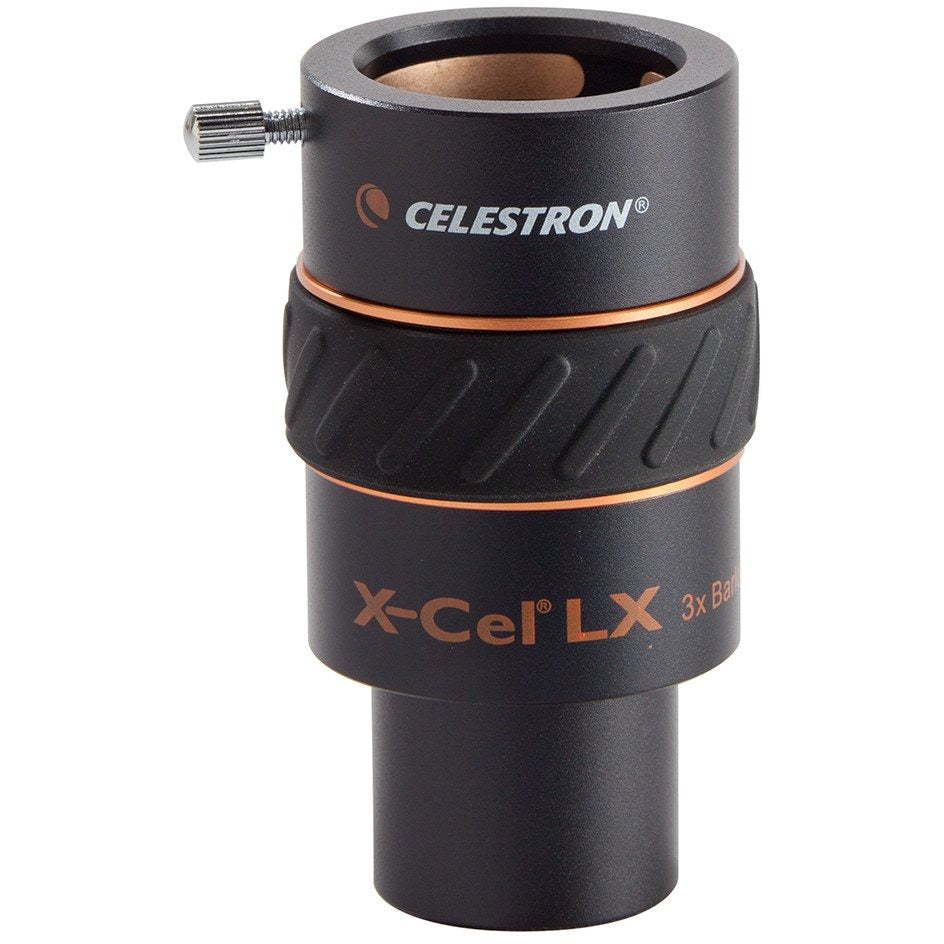
Our top pick survives from the previous version of this guide, with one asterisk: the price has climbed from around $75 to $124.95. It’s still worth it. The X-Cel LX is a three-element apochromatic design — a corrective element beyond the usual doublet — with full multicoating, blackened lens edges and a brass compression ring that won’t scar your eyepiece barrels.
The 3x factor is the planetary specialist’s choice: it turns a comfortable 25mm eyepiece into an 8.3mm-equivalent with all the eye relief intact, and it’s the standard recommendation for planetary imaging on slower scopes, where reaching the optimal image scale takes more amplification than a 2x provides. The compact three-inch body sits happily in a star diagonal.
One honest caution that applies to any 3x: check it against your eyepiece box first. If your shortest eyepiece is already 6mm on an f/5 scope, a 3x will blow past your telescope’s useful magnification on most nights. That’s not a flaw in the lens — it’s arithmetic. (Celestron sells a 2x version of the same optical design for the same money.)
- 3-element apo design — no false color
- Brass compression ring, filter threads
- The planetary imaging standard
- Compact enough for diagonals
- Price up ~$50 since 2021
- 3x can exceed useful magnification on fast scopes
GSO / Apertura 2x Shorty Barlow – Best Budget Barlow Lens
With Orion’s beloved Shorty gone, the budget crown passes to the lens that quietly out-performed it anyway: the GSO 2x Shorty, sold under the GSO name at Agena and as the Apertura 2x at High Point — same Taiwanese optics, pick whichever is cheaper the day you order. Around $34-45 buys a fully multicoated doublet in a low-profile three-inch body.
The party trick every owner should know: the lens cell unscrews from the barrel and threads directly onto an eyepiece’s filter thread, where it delivers roughly 1.5x instead of 2x. One cheap Barlow, two amplification factors — that’s three magnifications from every eyepiece you own.
The shorty length matters more than it looks: it keeps leverage off star diagonals in refractors and SCTs, and it’s kind to Newtonians with limited focuser travel. For anyone who bought a beginner telescope from our under-$300 guide, this is the natural first accessory.
- Best optics per dollar in the budget tier
- Lens cell doubles as a ~1.5x on eyepiece threads
- Shorty length suits diagonals and Newts
- Simple doublet — faint color on bright planets at high power
- Branding confusion (GSO = Apertura)
Celestron Omni 2x Barlow – Best First Barlow
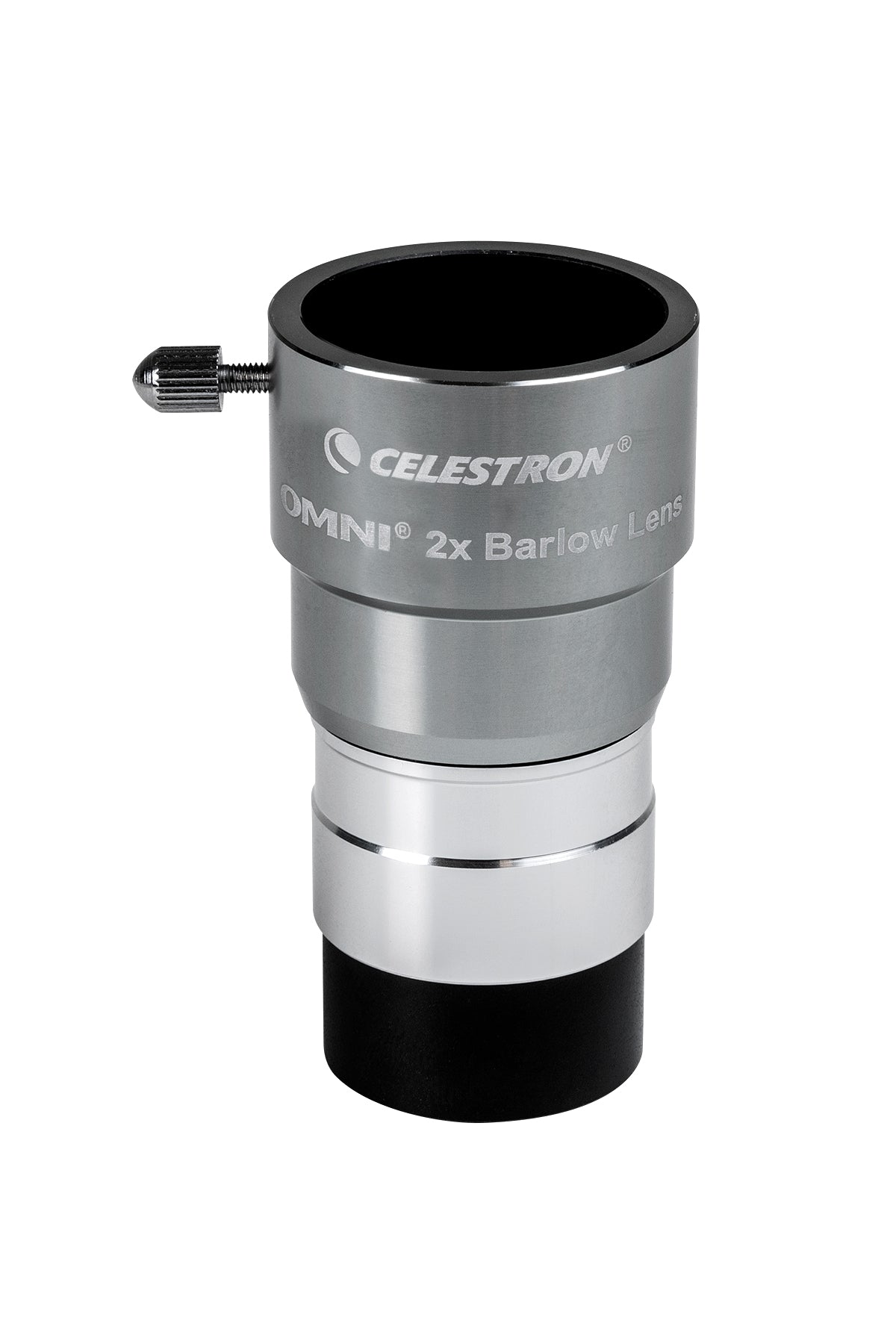
The Omni is the Barlow equivalent of comfort food: about $40, made by the biggest name in the hobby, fully multicoated with blackened lens edges, and sold everywhere telescopes are. If ordering from an astronomy specialty shop feels like a leap, the Omni is the answer you can get with Prime shipping.
Optically it trades blows with the GSO — a clean doublet that does exactly what it promises at 2x. The one build-quality gripe is the plain metal thumbscrew where pricier Barlows use a brass compression ring; tighten with care and it’s a non-issue. Its full-length body is actually a feature in some setups: more consistent 2x than a shorty when used in different focuser configurations.
- Trusted brand, ~$40, available everywhere
- Clean multicoated optics
- Filter threads included
- Thumbscrew, no compression ring
- Full-length body sticks out of Newtonian focusers
SVBONY SV137 2x – Best Cheap Barlow Doublet
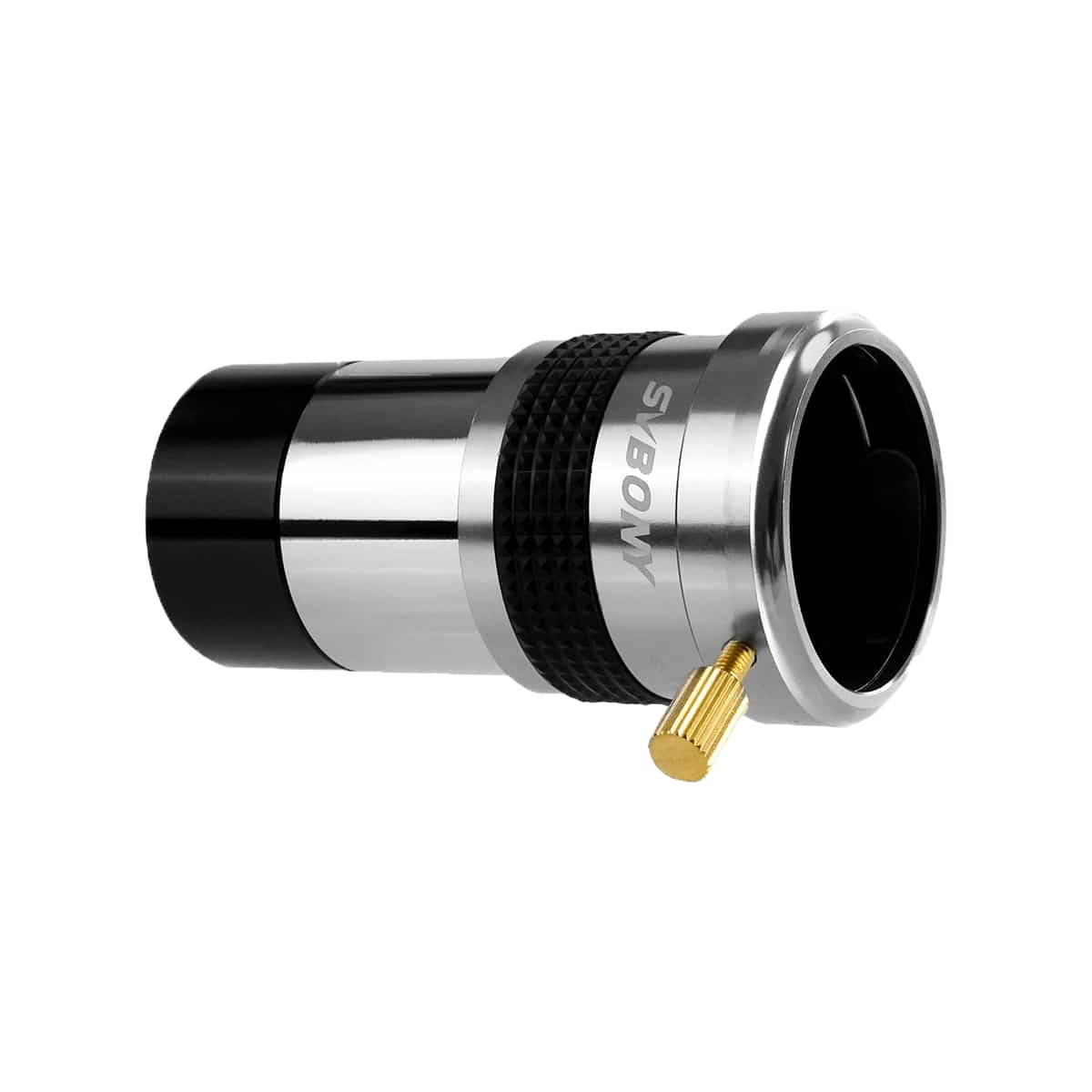
SVBONY has quietly become the budget accessory brand amateur astronomers actually respect, and the SV137 has replaced the older model we recommended here. For roughly $25-33 you get things this price didn’t buy a few years ago: true broadband multicoating, a CNC-machined body, blackened lens edges — and an internal brass compression ring, which even the Celestron Omni above lacks.
It’s a cemented doublet, so expectations should stay proportionate: great at 2x on the Moon, double stars and planets at sane magnifications; not a match for the three-element lenses higher up this list at the extremes. And if you want to see where SVBONY is heading, their SV216 2x telecentric (~$58) is a four-element mini-Powermate that forum reviewers have received warmly — the enthusiast’s sleeper pick.
- Brass compression ring at ~$30
- Real multicoating, CNC build
- SV216 telecentric upgrade path
- Simple doublet optics
- Price/stock bounce around on Amazon
Baader Q-Barlow 2.25x/1.3x – Most Versatile Barlow Lens
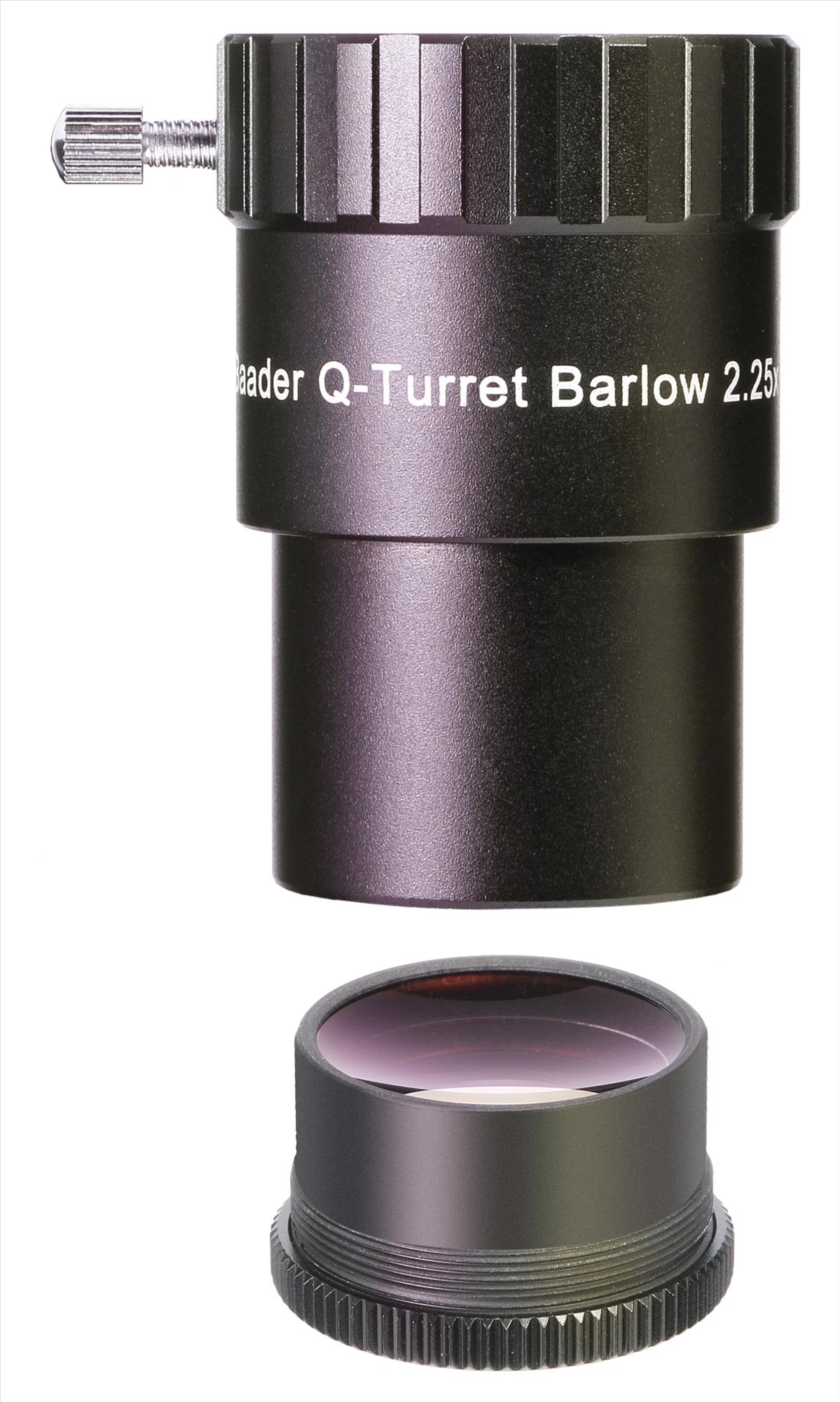
Baader’s Q-Barlow is the clever one. Used normally it’s a 2.25x — an unusual factor chosen deliberately, because it turns common eyepiece focal lengths into useful ones rather than duplicating what you own (an 18mm becomes an 8mm, a 25mm an 11mm). Unscrew the lens cell and thread it straight onto an eyepiece, and it becomes a gentle 1.3x.
Optically it has a giant-killer reputation: in the endless Cloudy Nights budget shootouts it’s repeatedly picked over lenses at twice the price, and its pedigree comes from Baader’s Classic Ortho line, where it was designed as the matching amplifier. German glass, HT multicoatings, tiny footprint.
Two things to know: the US price has risen to about $81 (it was a $40 legend a few years back — the reputation formed then, but the optics haven’t changed), and it holds eyepieces with a simple set screw. Fussier than average, more rewarding than average.
- Two factors in one: 2.25x and 1.3x
- 2.25x fills gaps instead of duplicating
- Punches far above its class optically
- US price nearly doubled since its budget-legend days
- Set screw, no compression ring
- Can vignette some wide-angle eyepieces
Celestron Luminos 2.5x – Best 2-Inch Barlow Lens
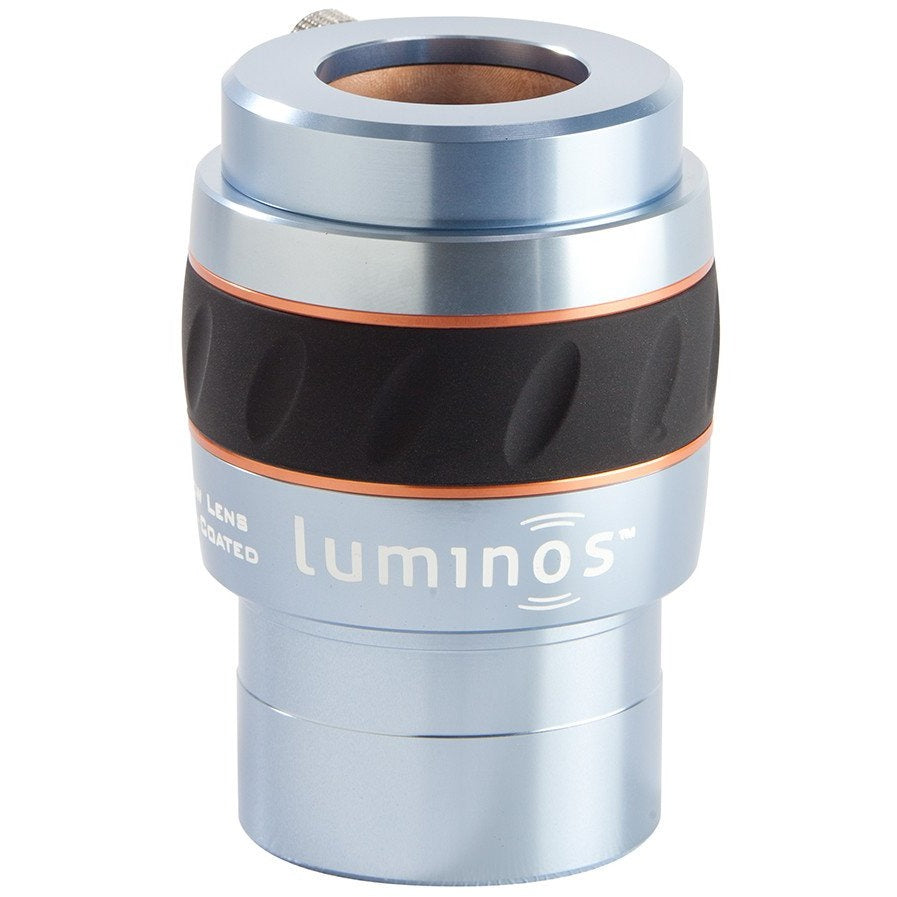
If you’ve graduated to 2-inch wide-field eyepieces, your Barlow has to grow with them. The Luminos is the affordable way to do it: a four-element apochromatic design in a full 2″ barrel, with a step-down adapter that takes 1.25″ eyepieces too — one Barlow for the whole case.
Four elements is Powermate-style ambition at $145-160, and it shows in the flat, color-free field that keeps wide-angle eyepieces sharp toward the edges. Oversized thumbscrews and a brass compression ring handle the heavy glass securely. It’s a big lens — over 300 grams — so rebalance a Dobsonian after loading it.
(Our previous 2″ alternative, the Astromania 2.5x, is still sold at about the same price — but with almost no independent reviews behind it, the Luminos is the documented choice.)
- True 2″ with 1.25″ adapter included
- 4-element apo — flat, color-free field
- Brass compression ring, 2″ filter threads
- Heavy — rebalance your scope
- 2.5x factor won’t suit every eyepiece set
Tele Vue 2x Barlow – The Premium Classic
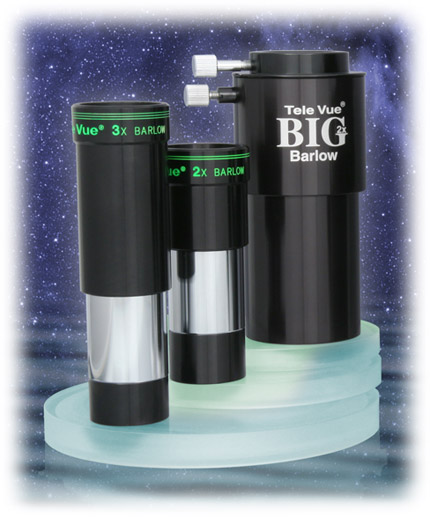
Tele Vue’s 2x Barlow is what happens when a company refuses to make anything mediocre: a two-element design executed with high-index glass and coatings good enough that BBC Sky at Night’s verdict amounted to “tremendous reputation, deserved.” It’s the Barlow you buy once, with eyepieces that cost more than some telescopes, and never think about again.
At $153 it’s for people who already know why they want it. And one step further up sits Tele Vue’s Powermate line (~$260 for the 2.5x): technically not a Barlow but a four-element telecentric amplifier that leaves eye relief and exit pupil untouched — the tool of choice for planetary imagers and binoviewer users. For purely visual observing through mid-range eyepieces, the honest advice from every reviewer is that a $40-80 Barlow above gets you most of the way there.
- Reference-grade optics and build
- Worthy of premium eyepieces
- Powermate upgrade path for imaging
- $153 for a 2x doublet
- Overkill for budget eyepiece sets
What Happened to Our Previous Picks?
- Orion 8707 3x 4-element Barlow — discontinued with Orion’s July 2024 closure; only used and leftover stock remains, with no warranty behind it. The same fate took Orion’s famous Shorty 2x and Meade’s Barlows.
- Astromania 2″ 2.5x — still sold (~$81), but with essentially no independent review record we’ve moved the 2″ slot to the better-documented Luminos.
- Prices moved up almost everywhere: X-Cel LX 3x ~$75→$125, Tele Vue 2x ~$115→$153, Powermate ~$215→$260. The budget doublets are the exception — still $25-45.
How to Choose a Barlow in 2026
Fill gaps, don’t duplicate. The classic mistake: a 2x Barlow plus a 25mm eyepiece exactly duplicates the 12mm you already own. Lay out your eyepiece focal lengths, divide by 2 (or 2.25, or 3), and buy the factor that creates magnifications you’re missing.
2x first, 3x for a reason. A 2x suits almost everyone; go 3x when your eyepieces cluster at long focal lengths or you’re imaging planets. Stay within 2x-3x — bigger factors mostly buy you empty magnification.
The eye-relief trick is the real reason to own one. A 30mm Plossl has generous eye relief; a 10mm Plossl is a squint-fest. A 30mm plus a 3x Barlow gives you the 10mm view with the 30mm’s comfort — which is why the standard advice for eyeglass wearers is: Barlow a long eyepiece rather than buying a short one. Bonus physics: a Barlow slows your telescope’s light cone, so cheap eyepieces actually perform better behind one.
Shorty vs full-length. Shorties are kinder to star diagonals and to Newtonians with limited focus travel; many (including the GSO and Baader above) also give a second, lower factor with the lens cell threaded on an eyepiece. Full-length designs hold their stated factor more consistently.
Conclusion
- One Barlow to rule them all: Celestron X-Cel LX (3x for imagers, 2x for most).
- First Barlow on a budget: GSO/Apertura Shorty or the Celestron Omni.
- The connoisseur’s cheap trick: Baader Q-Barlow.
- 2-inch eyepiece case: Celestron Luminos.
- Money no object: Tele Vue, and a Powermate for the camera.
Point any of them at Saturn with your favorite mid-power eyepiece and you’ll understand why the Barlow, nearly two centuries after Peter Barlow gave it his name, is still the first accessory every stargazer should own.